


Nestled on the banks of the River Wear, just a stone’s throw from Durham’s bustling city center, lies National Trust Crook Hall Gardens—a tranquil oasis that feels a world away from modern life. This remarkable National Trust property is not merely a garden but a historical tapestry, showcasing a unique architectural blend of a 13th-century medieval hall, a 17th-century Jacobean manor, and an 18th-century Georgian house, all coexisting in one location. This guide offers a comprehensive plan for the perfect visit, covering everything from the enchanting “garden rooms” and seasonal highlights to the practical details of tickets, parking, and a uniquely honest look at accessibility.
The story of Crook Hall is a compelling narrative of survival and preservation. Its origins trace back to the 14th century, when the oldest part of the hall was constructed by Peter del Croke. For nearly 300 years, from 1372, it was connected to the influential Billingham family, who made their mark on both the property and the city of Durham. Over the centuries, subsequent owners, like the Hoppers, added new wings, transforming the building into the layered architectural marvel seen today. The hall has welcomed esteemed literary figures, including the poets William Wordsworth and John Ruskin, who found inspiration within its grounds. Its history is also colored by local folklore, most notably the legend of its resident ghost, the “White Lady,” who is said to haunt the medieval structure.
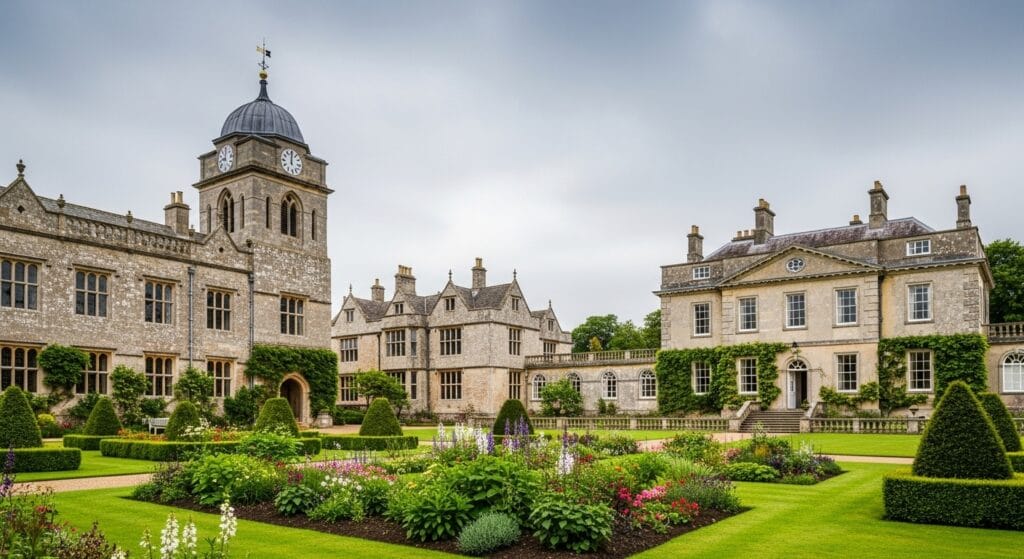
By the late 20th century, the property had fallen into a state of near-dereliction. It was lovingly rescued and restored by its last private owners, Keith and Maggie Bell, who transformed it into a cherished local attraction and wedding venue. Following its closure during the pandemic, its fate was uncertain until it was acquired by the National Trust in March 2022, beginning a celebrated new chapter. The reopening in July 2022 was met with immense public enthusiasm, with nearly 4,000 people visiting in the first two weeks alone, cementing its status as one of Durham’s most treasured heritage sites.
Planning Your Perfect Visit: Everything You Need to Know
To ensure a seamless experience, here is all the essential logistical information for planning a trip to Crook Hall Gardens. The property’s popularity, especially during peak seasons and weekends, makes advance planning advisable.
National Trust Crook Hall Gardens: Visitor Information At-a-Glance
| Feature | Details |
| Location | Frankland Lane, Sidegate, Durham, DH1 5SZ |
| Opening Times | Gardens, Café, & Bookshop times vary seasonally. Typically 10:00 – 17:00 in summer and 10:00 – 16:00 on weekends in winter. Check the official National Trust website for the most current hours before visiting. |
| Ticket Prices | Adult: £10.50/£9.50 (with/without Gift Aid) | Child: £5.30/£4.75 | Family (2A+3C): £26.20/£23.75 | Family (1A+3C): £15.70/£14.25 |
| National Trust Members | Free entry to gardens and free parking |
| RHS Members | Free admission for the individual member (or one member of a joint membership) |
| Parking | On-site Pay & Display car park. £3 for up to 3 hours for non-members. EV charging points available. |
| Dog Policy | Dogs are welcome on short leads throughout the gardens and in the Garden Gate Café. |
| Booking | Not required for general admission. Booking may be necessary for special events. |
How to Get to Crook Hall Gardens
By Car: The gardens are conveniently located near the A1(M). From Junction 62, take the A690 towards Durham City Centre. Follow signs for the city center and then Crook Hall, which is situated along the riverside past the Radisson Blu Hotel. For a hassle-free journey, consider our executive transport solutions in Durham to arrive in comfort.
By Public Transport: The nearest train station is Durham Station, which is approximately a 0.8-mile or a 10 to 15-minute walk away. The route is well-signposted from the city center. Several bus services stop nearby, with the closest stops being ‘The Chains – Woodman’ and ‘Leazes Rd – Underpass’.
On Foot: For those in Durham City, a pleasant and scenic walk along the River Wear leads directly to the gardens. It is well-signposted from the area around The Gates Shopping Centre and the Gala Theatre. This walk takes you past other historic landmarks, including the iconic Framwellgate Bridge.
Parking at Crook Hall Gardens: What to Expect
The property has its own on-site Pay & Display car park, located next to the Garden Gate Café building. Parking is free for National Trust members, who must scan their membership card at the machine. For all other visitors, the charge is £3 for a stay of up to three hours.
It is important for visitors to be aware that there is another, separate pay and display car park immediately adjacent to the National Trust site; drivers should follow the specific signs for Crook Hall Gardens parking to ensure they are in the correct one. On particularly busy days, when the on-site car park may be full, alternative parking can be found in Durham city center.
A Garden for All Seasons: When is the Best Time to Visit?
One of the great joys of Crook Hall is how it transforms throughout the year, offering a unique experience in every season. Deciding on the best time to visit Crook Hall Durham depends entirely on what you wish to see.
Spring (March – May): A Riot of Colour
Spring sees the gardens erupt in a vibrant display as they awaken from winter. The season begins with the subtle beauty of hellebores, snowdrops, and winter aconites, soon followed by bright splashes of anemones, cyclamen, and crocuses.
The highlight for many is the “magnificent display” from a large magnolia tree, which benefits from the shelter of the walled garden. The orchard becomes an unmissable sight, filled with a “frothy mass of blossom” from apple, pear, and ornamental cherry trees. The air is filled with the promise of new life, and beds of tulips and daffodils provide a classic, cheerful backdrop.

Summer (June – August): Lush Greens and Sweet Scents
Summer is a time of lush abundance and sensory delight. The various roses throughout the gardens come into their own, filling the air with their classic beauty and scent.
In the walled gardens, beds of phlox, oriental poppies, and ox-eye daisies compete for attention with their bright, cheerful flowers. The moat pool becomes a hub of activity, “teeming with life” as frogs, newts, and dragonflies dart across the water’s surface. The vegetable plots and greenhouse are also at their peak, with visitors able to enjoy the “simple fragrance of tomatoes on the vine”.
Autumn (September – November): Fiery Berries and Rich Hues
As summer fades, autumn brings a dramatic shift in the garden’s palette. The Cotoneaster maze undergoes a fascinating transformation, its dark green leaves giving way to a spectacular display of fiery red berries that develop throughout the season.
Elsewhere, shrubs provide stunning moments of color; look for the Callicarpa, or beautyberry, with its “vivid purple berries,” and the unexpected pops of color from autumn crocuses emerging from the lawns. It is a season of rich, warm tones and a quieter, more reflective atmosphere.

Winter (December – February): Structural Beauty and Subtle Perfume
Winter reveals the garden’s underlying structure—its “bones.” With the leaves gone, the intricate forms of trees and shrubs are exposed, from the twisted, contorted stems of the corkscrew hazel to the distinctive silver trunks of birch trees.
Cheerful red berries on holly bushes provide a festive touch, while the evergreen shrub Sarcococca, or sweet box, fills the crisp air with its “unmistakeable winter perfume”. It’s a perfect time for a quiet visit, perhaps followed by a ride in one of our cozy, heated taxis to warm up.
Exploring the Grounds: A Self-Guided Tour of the Garden Rooms
The 10-acre grounds are best explored as a series of interlinked “garden rooms,” each with its own distinct character and style. A visit feels like a journey of discovery, with intriguing paths leading from one enchanting space to the next.
The Entrance & The Famous Maze
Upon entering from the admissions area, one of the first features visitors encounter is the living maze. Planted in the year 2000, this modern feature is a puzzle constructed primarily from Cotoneaster. It is a delight for visitors of all ages, though its entrance is narrow and the paths are surfaced with bark chips, which can be uneven.
The Walled Gardens: A Sunny, Sheltered Haven
Considered by many to be the heart of the property, the walled gardens offer a sunny, sheltered microclimate that allows a wide variety of plants to flourish. The style is reminiscent of a classic English cottage garden, with blooming borders and gravel paths. From this area, visitors can enjoy magnificent views of the nearby Durham Cathedral, a constant reminder of this green oasis’s proximity to the city’s historic core.

The Moat Pool & Orchard
A path leads up to the tranquil moat pool, a serene body of water planted with water lilies, hosta, and iris. This feature was originally a dry defensive ditch dating to the 14th century but was later transformed into a lake. It is now a haven for wildlife, including ducks and moorhens. Adjacent to this is the orchard, planted with old varieties of apples, plums, and cherry trees, which is particularly beautiful when in blossom during the spring.
The Themed Gardens: Shakespeare, Silver & White
Beyond the main areas, a series of smaller, more intimate themed gardens invite quiet contemplation. The Shakespeare Garden is planted with flora typical of the 16th century, inspired by the plants mentioned in his works. Nearby is the Silver and White Garden, planted by previous owners to celebrate their silver wedding anniversary, offering a sophisticated and calming palette.
Inside the Medieval Hall & Second-Hand Bookshop
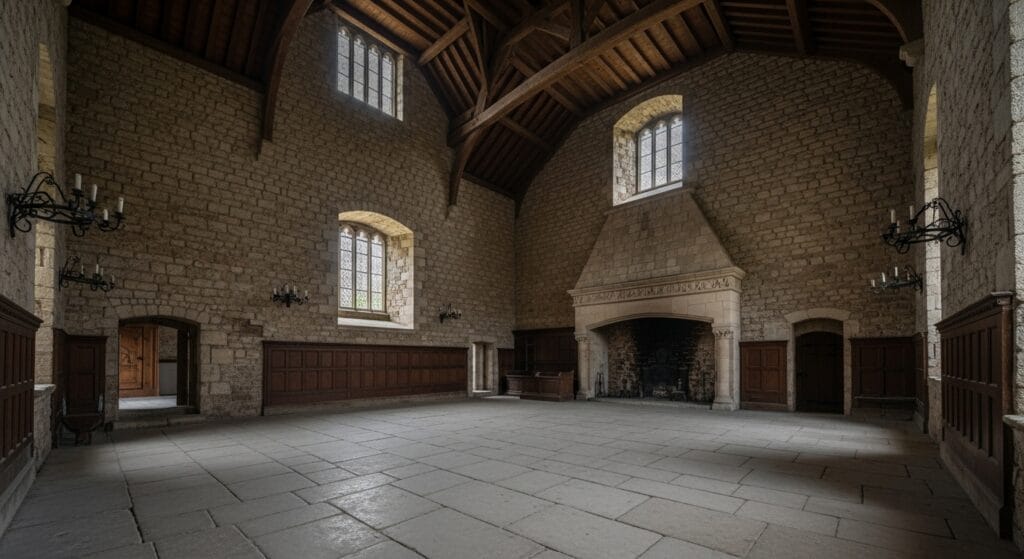
While the Jacobean and Georgian wings of the house are not currently open, visitors are welcome to explore the magnificent medieval hall. This large, stone-walled room is left mostly unfurnished, allowing its historic architecture to take center stage, including a great fireplace and a minstrel’s gallery. On a hot day, its thick stone walls provide a welcome, cool escape.
Housed within the Jacobean Room is a charming second-hand bookshop, where visitors can browse a wide selection of pre-loved books, with all proceeds going directly towards the care of the property. It’s a perfect companion piece to a visit to other historic properties like Ushaw Historic House & Gardens.
Guide to Accessibility at National Trust Crook Hall Gardens
Navigating accessibility information for historic properties can be challenging. National Trust Crook Hall Gardens, with its Grade I listed status and location on a natural slope, presents a mixed accessibility picture. This section provides a consolidated and realistic overview to help visitors with mobility needs determine if a trip is suitable for them, based on official reports and first-hand visitor accounts.
Accessibility Checklist
| Feature | Status | Notes |
| Accessible Parking Bays | Yes (3 Blue Badge bays) | Located in the main car park, which itself is on a steep slope. |
| Step-Free Entrance | Yes (via alternative gate) | The main entrance from admissions has steps. The designated accessible route is via a steep incline from the car park. |
| Path Surfaces | Mixed (Tarmac, Gravel, Grass, Bark) | Many paths are narrow, winding, and uneven. Some areas are inaccessible to wheelchair users. |
| Step-Free Access to Café | Yes | There is step-free access to the main café entrance and the outdoor terrace seating. |
| Accessible Toilets | Yes (1) | A single accessible toilet with baby changing facilities is located in the Garden Gate Café. |
| Access to Medieval Hall | Limited | Access to the historic hall may involve steps or uneven stone flooring. Visitors should inquire at admissions. |
| Mobility Scooter Hire | No | Mobility aids are not available to borrow or hire on-site. |
A Visitor’s Experience: Navigating the Slopes and Paths
The entire site is built on a hillside sloping down towards the River Wear. This topography is fundamental to the garden’s character but also presents its primary accessibility challenge. The car park itself is on a steep incline, and the accessible route into the gardens involves navigating this slope. Visitor feedback highlights this, with one account noting, “The car park is in quite a steep incline and difficult to get across”.
Once inside, the paths are a mixture of surfaces. While some lawned areas are level, moving between the different garden rooms requires traversing paths of gravel, grass, or bark chips, many of which are narrow and have a gradient. One power chair user reported that the “uneven paths were hardly wide enough… and difficult to manoeuvre”. While staff are on hand to assist and advise, prospective visitors who use wheelchairs or have significant mobility limitations should be prepared for a challenging landscape outside of the main café area and the lower gardens.
Food, Drink, and Shopping: The Garden Gate Café & Bookshop
The Garden Gate Café
The Crook Hall Gardens cafe is a welcoming and modern wooden building located at the entrance to the car park. Admission to the café is free, making it a popular pit stop for garden visitors, locals, and those walking the riverside path. It offers both indoor seating and an outdoor terrace.
The menu consists of hot and cold drinks, light bites, and cakes. Options include sandwiches, paninis, soup, sausage rolls, and pasties, with vegetarian and vegan choices available. A highlight is the locally made Doddington Dairy ice cream. To help visitors plan, typical prices are around £3.15 for a regular Americano, from £2.60 for cakes, and from £5.20 for hot food items.
The Second-Hand Bookshop
A charming feature of any visit is the second-hand bookshop located within the Jacobean Room of the hall. It offers a wide selection of donated books, and Browse its shelves provides a wonderful opportunity to soak in the atmosphere of the historic building. All proceeds from book sales directly support the conservation and care of Crook Hall Gardens.
What’s On? Events, Tours, and Activities
Crook Hall Gardens hosts a vibrant and varied program of Crook Hall Gardens events throughout the year, adding another layer to the visitor experience. These range from regular guided tours to large seasonal festivals. You can check for upcoming events in Durham this month to see what’s on during your visit.
Regular guided tours offer deeper engagement with the property. On Wednesdays, visitors can join a tour focused on the hall’s history and its fascinating literary links. On Fridays, expert gardening volunteers lead horticulture tours, sharing their knowledge of the plants and the sustainable, nature-friendly gardening practices used on site.
Seasonal events are a major draw, particularly the “Summer of Play,” which features a host of family-friendly activities, self-led trails, nature crafts, and facilitated sports sessions. Other unique events include outdoor theatre performances, live music from local musicians, guided poetry walks, and even nighttime moth-watching sessions. For a full calendar, check out Durham’s year-round guide to loved events.
Crook Hall Gardens is far more than just a beautiful garden; it is a multi-layered historic site, a tranquil natural escape, and a powerful testament to the importance of heritage preservation. Its unique combination of intimate, characterful garden rooms, a history stretching back over 700 years, and its remarkable position as a secluded oasis within a city make it a truly special destination. The recent acquisition by the National Trust has secured its future, ensuring that its story and its beauty can be shared with generations to come.
Whether you are seeking a peaceful afternoon among the flowers, a fun and educational day out with the family, or a walk through centuries of English history, a visit to Crook Hall Gardens is an unforgettable Durham experience. For any travel needs within the city or beyond, don’t hesitate to contact us.
Frequently Asked Questions (FAQ)
Is Crook Hall Gardens free for National Trust members?
Yes, entry to the gardens and parking are both free for National Trust members upon scanning a valid membership card.
Can you take dogs to National Trust Crook Hall Gardens?
Yes, dogs are welcome throughout the gardens and in the café, provided they are kept on a short lead.
Is Crook Hall Gardens wheelchair accessible?
The site has significant accessibility challenges due to steep slopes and narrow, uneven paths. While there is an accessible toilet and step-free access to the café, many parts of the garden are difficult to navigate for wheelchair users. Please see the detailed “Honest Guide to Accessibility” section above.
Do you have to book Crook Hall Gardens tickets in advance?
No, booking is generally not required for standard entry. You can pay on arrival. However, booking is often essential for specific events and workshops. You can always use our smart taxi booking service to plan your transport ahead of time.
What is the best season to visit?
This depends on your interests. Spring is best for blossoms and bulbs, summer for lush flower beds and roses, autumn for rich colors and berries, and winter for seeing the garden’s structure.
