


Seen the Cathedral? Discover the “Real” Durham Like a Local
You’ve ticked off Durham Cathedral and the Castle—they’re absolutely magnificent, aren’t they? But now you’re wondering: what else is there? Where do the locals go? Where can I find those quieter, more authentic Durham experiences that don’t appear on every tourist map?
As Durham’s trusted local transport experts, we hear this question all the time. The truth is, some of Durham’s most rewarding attractions are tucked away in places that are surprisingly tricky to reach—up steep hills, down confusing cobbled lanes, or miles out in the County Durham countryside with limited bus service.
That’s exactly why we’ve created this insider’s guide. We’ll show you five incredible hidden gems that will give you the “real” Durham experience, and—just as importantly—we’ll tell you the smartest, most stress-free way to actually get to each one.
Here’s what you need to know: Durham’s best-kept secrets are waiting for you, but they require a bit of local knowledge to access. Whether it’s a five-minute ride to avoid a rain-soaked cobbled walk or a pre-booked excursion to a 1,300-year-old church in the countryside, we’ve got the insider tips to make your Durham discovery effortless.
Key Takeaways
- Durham’s hidden gems include medieval gardens, world-class botanic collections, riverside monastic ruins, industrial heritage sites, and one of England’s oldest Saxon churches
- Transport is the key challenge: Many of these locations involve steep hills, confusing routes, limited parking, or poor public transport connections
- Strategic taxi use transforms these visits from logistical challenges into comfortable, stress-free experiences
- Distance matters: Gems range from 5-minute city rides to 20-25 minute countryside excursions—each requires a different transport solution
- Pre-booking is essential for remote locations where you can’t simply hail a cab for your return journey
Gem #1 (The City Oasis): Crook Hall and Gardens
What is Crook Hall?
Crook Hall is Durham’s best-kept secret—and it’s hiding in plain sight, just steps from the Market Place. This Grade I listed medieval hall dates back to the 13th or 14th century and offers something truly unique: it’s actually three historic houses in one. The original medieval open hall was extended with a beautiful Jacobean wing in the 1600s, and then again with a Georgian townhouse in the 1700s.
But it’s the gardens that really steal the show. Tucked away on the banks of the River Wear, these interlinked gardens are often described as Durham’s “secret garden”—a floral oasis featuring a maze, a walled garden, an orchard, and even a moat pool. From several vantage points, you’ll catch stunning views of Durham Cathedral rising above the trees.
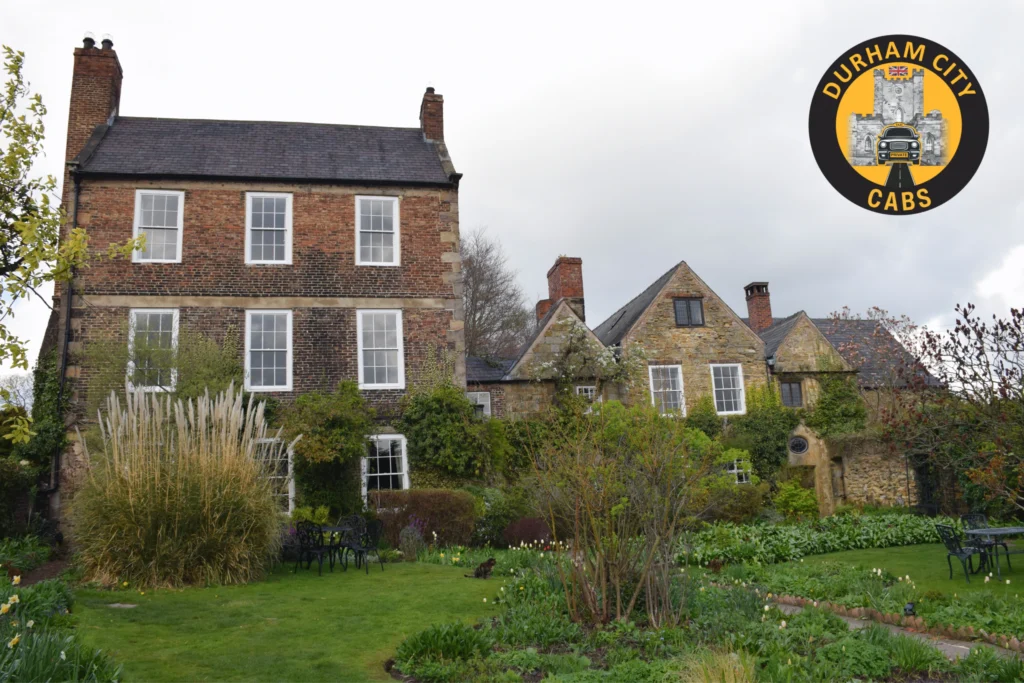
The property was a private wedding venue for years until COVID-19 changed everything. In March 2022, the National Trust stepped in and reopened it to the public. And if you’re a fan of ghost stories? The hall is famously haunted by the “White Lady,” making it one of Durham’s most atmospheric historic sites.
Why You’ll Love It
The “Insider” Vibe: This is where Durham residents bring their visiting friends and family—the place that feels like you’ve discovered something special. It’s peaceful, intimate, and genuinely enchanting.
Rainy Day Ready: With three centuries of historic rooms to explore inside and extensive gardens outside, Crook Hall is perfect when the notorious North East weather can’t make up its mind. Start inside with a coffee from the Garden Gate Café, then head out when (if!) the sun appears.
Perfect for Everyone: National Trust members get free entry. Garden enthusiasts will spend hours in the maze and walled garden. History buffs will love the architectural timeline. Families will enjoy the open spaces and the second-hand bookshop.
Key Information:
- Address: Frankland Lane, Durham, DH1 5SZ
- Opening: Daily 10:00-17:00 (last entry 16:00)
- Entry: £9.50-£10.50 adults; FREE for National Trust members
- On-site: Café, bookshop, toilets, free parking for NT members
The Smartest Way to Get There
The Problem: Yes, it’s only a 10-minute walk from the Market Place—but what the walking guides don’t mention is that those 10 minutes involve navigating Sidegate’s cobbled streets and uneven riverside paths. If you’ve got mobility concerns, you’re pushing a buggy, or it’s raining (which, let’s be honest, is often in Durham), that “short walk” becomes genuinely unpleasant.
And if you’re driving? The approach is notoriously confusing. You turn off Milburngate into what looks like a multi-storey car park entrance, then wind past the Radisson Blu following small National Trust signs. I’ve seen countless first-time visitors miss the turn and circle back confused.
The Solution (By Cab): A 5-minute taxi ride bypasses all of it. Our drivers know the route intimately—that confusing car park entrance, the exact turn-offs—and we’ll drop you right at the main entrance next to the café. No wet cobbles. No wrong turns. No stress.
Given that most visitors spend one to two hours exploring, we can arrange a pre-booked collection time. Simply call us when you’re finishing up, and we’ll have you back to your hotel or on to your next Durham adventure.
Worth noting: While you can show a bus ticket at the entrance for a 25% discount, the comfort and door-to-door convenience of a direct cab ride—especially in Durham’s unpredictable weather—offers genuine value. Our drivers can also share insights about the “White Lady” ghost legend and the building’s fascinating history as a wedding venue before the National Trust took over.
Gem #2 (The Hilltop Escape): Durham University Botanic Garden
What is the Botanic Garden?
The Durham University Botanic Garden is a world-class, 25-acre green sanctuary that most tourists never even know exists. Since opening to the public in 1988, it’s been drawing over 80,000 visitors annually—though you’d never guess it from how peaceful it feels.
This isn’t just a pretty park. The garden houses internationally significant plant collections from around the globe: dedicated sections showcase flora from Chile, China, Japan, Southern Africa, and New Zealand. There’s a North American arboretum, an Alpine garden, a bamboo grove, and a winter garden that proves Durham can be beautiful even in February.
The real stars, though, are the climate-controlled glasshouses. Step inside and you’re transported: tropical rainforest plants, desert cacti, Mediterranean species—all thriving in the North East. And here’s the bit that makes kids go wild: the glasshouses are home to a collection of tropical insects, scorpions, butterflies, and tarantulas.
Throughout the woodland, you’ll also discover art installations like the impressive ‘Vessels of Life’ sculpture and the quirky ‘Fungate’ mushroom sculptures.
Why You’ll Love It
Perfect for All-Weather: When that North East drizzle sets in (and it will), the extensive glasshouses become your refuge. You can easily spend an hour exploring the tropical, desert, and Mediterranean environments while staying completely dry.
Great for Families: The bug and insect collection is genuinely fascinating—educational without being boring. The woodland paths and open spaces give children room to explore, and the sculptures scattered throughout create a natural treasure hunt.
A Genuine Escape: This is the North East’s only remaining university botanic garden since Newcastle’s closed. It’s a place of genuine scientific importance, but more than that, it’s simply a beautiful place to spend a morning or afternoon away from the city bustle.
Key Information:
- Address: Hollingside Lane, South Road, Durham, DH1 3TN
- Opening: Summer (Mar-Oct) 10:00-16:30; Winter (Nov-Feb) 10:30-16:00
- Entry: £5.00 adults, £4.50 concessions; FREE for under-16s and RHS members (Mon & Thu)
- On-site: Visitor centre, coffee shop, gift shop, toilets, picnic areas
The Smartest Way to Get There
The Problem: The garden is about 1.5 miles south of the city centre and train station. That doesn’t sound far until you realize it’s uphill all the way. The official Durham University website doesn’t sugarcoat it: the walk from the station is “about half an hour” and “quite hilly at times.”
I can tell you from years of local experience: “quite hilly” is British understatement at its finest. It’s a steep, sustained climb along South Road that leaves even fit visitors breathless. If you’re elderly, have young children, or have any mobility or respiratory concerns, this walk ranges from challenging to genuinely prohibitive.
Yes, local buses (lines 42 and 6) run along South Road with stops relatively close to the garden. But that still involves finding the right bus, understanding the local routes, and then walking from the stop—you haven’t escaped the hill entirely.
The Solution (By Cab): A 10-minute taxi ride takes you from the city centre or your accommodation straight to the main entrance at the top of that hill. We deliver you fresh and ready to explore, rather than exhausted before you even start.
Our drivers will drop you at the Hollingside Lane entrance, which provides the most direct access to the Visitor Centre and café. They can also point out that this is now the only university botanic garden left in the North East since Newcastle’s closed—making it a truly special regional treasure. When you’re ready to leave, give us a call—we’re typically just 10 minutes away.
Think of it this way: would you rather spend your energy walking up a steep hill, or exploring 25 acres of beautiful gardens and glasshouses? We know which we’d choose.
Gem #3 (The Riverside Retreat): Finchale Priory
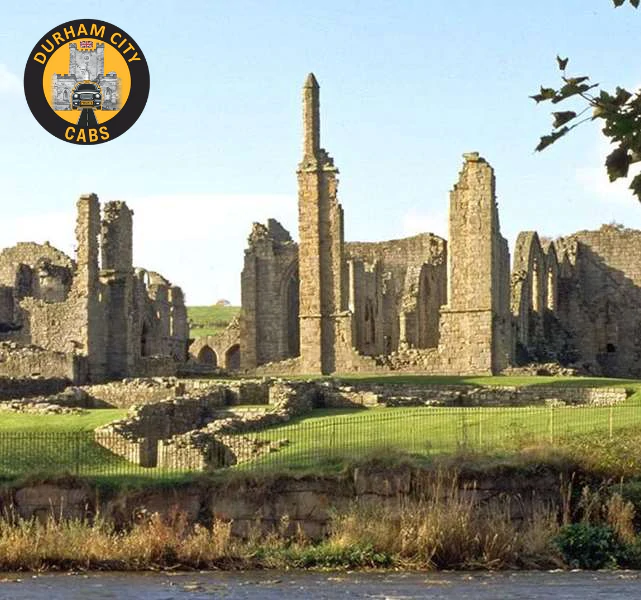
What is Finchale Priory?
If you want a genuine “explorer discovers hidden ruins” experience, Finchale Priory delivers. These 13th-century Benedictine ruins sit in an idyllic, secluded bend of the River Wear, about four miles northeast of Durham city. The setting is genuinely romantic—ancient stone arches framed by mature woodland, with the river flowing past.
But the real story starts earlier, with a man named St. Godric. In the 12th century, Godric was a merchant sailor and, according to legend, a bit of a pirate. Then he had a religious conversion so profound that he became a hermit, settling at this very spot. His piety became so famous that figures like St. Thomas Becket and even Pope Alexander III sought his counsel.
After Godric’s death, monks from Durham Cathedral founded Finchale Priory on the site of his hermitage in 1196. But here’s what makes it unique: it wasn’t a conventional working monastery. Instead, it functioned as an official “holiday retreat” for the monks of Durham—a place where they could escape the city’s demands and relax by the river. This continued for over 300 years until Henry VIII’s Dissolution in 1538.
A simple stone cross in the grass marks St. Godric’s grave. And there’s one more curious bit of history: on May 1st, 1942, German bombers mistook the priory for Durham Cathedral (thanks to heavy mist) and dropped their bombs here instead. The cathedral was spared; the priory took the hit.
Why You’ll Love It
Truly “Hidden”: This is where you escape the crowds entirely. While tourists queue at the Cathedral, you’ll be exploring atmospheric ruins with only birdsong for company. The photo opportunities here are exceptional—these are the shots that make your friends back home jealous.
Picnic Perfect: The site is managed by English Heritage, and entry is completely free. The surrounding grassy areas are ideal for picnics, and the adjacent woodland offers lovely walking trails. This is a proper “day out” destination.
Rich History, Zero Crowds: For history enthusiasts, this is gold: medieval monastic architecture, connections to a pirate-turned-saint, and that unexpected WWII bombing story. But unlike Durham’s main attractions, you’ll often have the place largely to yourself.
Key Information:
- Address: Finchale Avenue, Framwellgate Moor, DH1 5SH
- Opening: Daily, 10:00-17:00 (Apr-Oct); 10:00-16:00 (Oct-Mar)
- Entry: FREE
- Note: On-site parking is privately run (£4, 2-hour max) and limited; small tea room nearby
The Smartest Way to Get There
The Problem: This is where public transport starts to break down. The priory sits at the end of a long, dead-end road that runs past HMP Frankland prison. The recommended bus service (Arriva/Scarlet Band 62) will get you to the prison, where you’re then instructed to take “a short walk” to the priory.
Let’s be clear: that’s not an appealing proposition for many visitors. And it gets worse—the bus doesn’t run on Sundays or Bank Holidays, which are precisely when most leisure visitors want to go.
If you drive yourself, you face a small, privately-run car park with a £4 fee and a strict 2-hour limit. On busy days, spaces fill up quickly.
The Solution (By Cab): An 11-minute direct taxi ride from Durham city centre solves everything. We’ll take you straight to the priory entrance—no prison walks, no parking fees, no time limits, no scheduling around limited bus timetables.
But here’s the crucial bit: due to the priory’s remote location, this needs to be treated as a “wait and return” or pre-booked collection. There’s no passing taxi traffic out here; a one-way drop would leave you genuinely stranded.
We recommend one of two options:
- Fixed-Price “Wait & Return”: We drop you off, wait while you explore for an hour or so, and bring you straight back. Fixed price, no meter stress.
- Pre-Booked Collection: We drop you off, you explore at your own pace, and you call us 10 minutes before you’re ready to leave. We’ll have a driver back to collect you.
For a group of two or more, when you factor in bus fares, parking fees, and the sheer inconvenience of public transport (especially on weekends), our taxi service is competitively priced and infinitely more convenient. Our drivers can also share the fascinating story of St. Godric the pirate-turned-hermit and explain how this was Durham Cathedral’s official “holiday retreat”—details that bring the ruins to life.
Ask us about our “Finchale Priory Explorer” package when you book.
Gem #4 (The Industrial Giant): Causey Arch
What is Causey Arch?
Causey Arch holds a unique place in world history: it’s officially the oldest surviving single-arch railway bridge on the planet, built way back in 1725-26. Stand beneath it and you’re looking at a genuine piece of Industrial Revolution engineering genius.
The arch was constructed to carry an early, horse-drawn waggonway over the deep gorge of the Causey Burn. At its peak, over 900 coal wagons a day would cross this bridge, transporting coal from the Tanfield collieries to ships waiting on the River Tyne. The scale was remarkable for the time: the arch spans over 100 feet and rises 80 feet above the burn below.
The site comes with a tragic legend, too. The master mason, Ralph Wood, was reportedly so convinced that his pioneering design would collapse that he jumped to his death from the bridge before it was even completed. Of course, he was wrong—the arch has stood strong for almost 300 years.
Today, the area is a beautiful country park managed by Durham County Council. The mature woodland offers numerous walking trails with stunning views of the arch and gorge. You’ll find a replica 18th-century coal wagon on site and information panels explaining the waggonway’s history. It’s a fascinating blend of industrial heritage and natural beauty.
Why You’ll Love It
For History & Engineering Fans: If you appreciate industrial heritage, this is a pilgrimage site. The sheer age of the structure combined with its historical importance makes it a must-see.
Get Out in Nature: This is where you properly escape the city. The woodland walks are excellent, the air is fresh, and the scenery is genuinely beautiful. The designated picnic area makes it perfect for a family day out.
Combine Your Visit: The nearby Tanfield Railway (heritage steam railway) is just a short distance away, making this an ideal area for a half-day or full-day countryside excursion.
Key Information:
- Address: Near Stanley, postcode NE16 5EG
- Opening: Year-round access
- Entry: FREE
- Facilities: Large car park (with disabled spaces), picnic area, “Easy Access” path to viewpoint (note: one steep gradient near start)
The Smartest Way to Get There
The Problem: Causey Arch is located approximately 9.5 to 13 miles northwest of Durham city, deep in the County Durham countryside. For a tourist without a car, this creates serious logistical challenges.
Public buses (Go North East services x30 and x31) do operate in the general area, but they’re infrequent, don’t offer direct routes from most Durham accommodations, and—critically—there’s no Sunday service. That weekend trip you were planning? The bus isn’t an option.
For a family or small group, even if you navigate the bus system successfully, you’re looking at a complex, time-consuming journey with multiple potential connection points. It’s the kind of trip that sounds simple on a route planner but becomes frustrating in reality.
The Solution (By Cab): A pre-booked taxi turns a complicated, hour-plus bus journey into a simple, comfortable 20-25 minute direct ride. No timetables. No connections. No Sunday service gaps. Just door-to-door transport that gets you there and back with zero stress.
For a group of three or four people, when you split the fare, a taxi is genuinely cost-competitive with bus fares—and infinitely more convenient. You can leave when you want, return when you want, and spend your time exploring rather than waiting at bus stops.
Like Finchale Priory, the remote location means this is best arranged as either:
- “Wait & Return” Package: Fixed price including waiting time while you explore and walk
- Pre-Booked Collection: Drop-off with arranged collection time
This is exactly the kind of rural gem that’s genuinely difficult to access as a tourist—but becomes completely accessible with the right transport partner. Our drivers know the area well and can share the dramatic story of Ralph Wood’s tragic leap, plus point out the replica coal wagon and best viewpoints.
Contact us to discuss our “Causey Arch Explorer” package, perfect for groups and families.
Gem #5 (The Ancient Wonder): Escomb Saxon Church
What is Escomb Saxon Church?
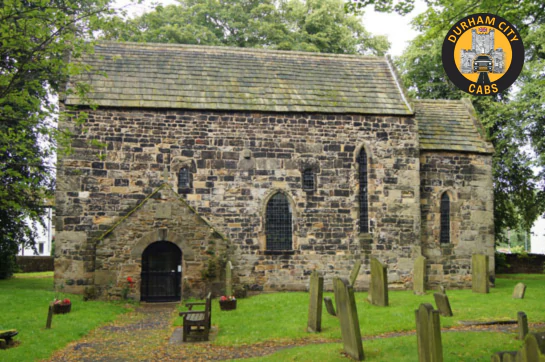
Escomb Saxon Church is extraordinary. It’s widely regarded as one of the oldest, most complete, and best-preserved Anglo-Saxon churches in England, with construction dating to around 675 AD. Read that again: 675 AD. This Grade I listed building has been standing for over 1,300 years.
The church is a genuine time capsule from the “Dark Ages.” Its tall, narrow, and deliberately austere stone structure has remained largely unaltered for thirteen centuries. Walking inside is like stepping back through history to a time when Christianity was still relatively new to England.
Much of the stone used in construction was recycled from the nearby Roman fort of Vinovia at Binchester. The most striking example is visible on the north wall: a large stone bearing the inscription “LEG VI” (indicating it was dressed by the Roman Sixth Legion) was built into the wall—upside down. The 7th or 8th-century sundial, a simple stone slab used by monks to mark prayer times, remains in its original position on the south wall.
Here’s what makes visiting even more special: the church is kept locked for preservation. To enter, you collect the key from house No. 28 Saxon Green, let yourself in, explore at your leisure, and return the key when finished. It’s the ultimate “insider” experience—you’re trusted as a careful visitor to this irreplaceable piece of heritage.
Why You’ll Love It
The Ultimate “Hidden Gem”: This is as authentic and off-the-beaten-path as it gets. While coach parties queue at Durham Cathedral, you’ll be standing alone inside a building that has hosted Christian worship for 1,300 uninterrupted years. Very few tourists make this journey—which means you’ll be one of the few.
For the True Explorer: This isn’t a polished tourist attraction with gift shops and audio guides. It’s raw, authentic history. The upside-down Roman stone, the ancient sundial, the profound sense of age—this is for travelers who genuinely want to feel history rather than just see it.
Spiritual Significance: As a registered member of the Small Pilgrim Places Network, Escomb attracts modern pilgrims on spiritual journeys. There’s a profound peace here that’s hard to describe.
Key Information:
- Address: Saxon Green, Escomb, Bishop Auckland, DL14 7SY
- Opening: Daylight hours via key collection from No. 28 Saxon Green (Summer: 09:00-20:00; Winter: 09:00-16:00)
- Entry: FREE (donations welcome)
- Accessibility Note: Two shallow stone steps at entrance; accessible toilets available at Saxon Inn opposite by arrangement
The Smartest Way to Get There
The Problem: Here’s the reality: Escomb is approximately 13-16 miles west of Durham near Bishop Auckland. For a tourist staying in Durham city without a car, reaching Escomb via public transport is borderline impossible.
Travel planning apps suggest a journey involving multiple bus transfers that could take nearly two hours each way. That’s four hours of transport for a visit to a single church. Compare that to a 22-minute direct drive, and you can see the scale of the problem.
This isn’t a “slightly inconvenient” journey—it’s a journey that effectively prevents 95% of tourists from ever seeing one of England’s most important Saxon buildings.
The Solution (By Cab): A pre-booked Durham City Cabs excursion is the only practical way for a visitor to experience Escomb. We transform a four-hour public transport ordeal into a comfortable 22-minute direct drive through the County Durham countryside.
This is our premier “Hidden Gem” package. Due to the distance and the fact that you’ll need guaranteed return transport (there’s no cab traffic in Escomb village), we offer a fixed-price “Wait & Return” package. Here’s how it works:
- We collect you from your Durham accommodation
- We drive you directly to Escomb (22 mins)
- Our driver points out house No. 28 where you collect the key
- Our driver waits while you explore the church (typically 45-60 minutes)
- We drive you back to Durham (22 mins)
Total experience: approximately 1.5-2 hours. Total transport headache: zero.
For the estimated cost of around £100-£130 return (depending on starting point), you’re not just paying for miles—you’re paying for the feasibility of the entire experience. Without this service, as a Durham-based tourist, you simply cannot see this remarkable church.
We frequently arrange these excursions for serious history enthusiasts, architecture students, and travelers who want that truly special, authentic experience that most tourists will never have. Our drivers can share insights about the upside-down Roman stone and the unique key collection tradition that makes every visit feel personal.
Call us to book your “Escomb Saxon Church Private Excursion”—this isn’t a quick cab ride; it’s a carefully arranged half-day experience.
Which Hidden Gem is Right for You? (A Quick Comparison)
Not sure which gem to tackle first? Here’s a quick decision-making guide based on your interests, available time, and the specific transport solution each location requires:
| Crook Hall | Gardens, rainy days, National Trust members, short trips | < 5 mins | Cobbled streets, riverside paths, confusing car park entrance, miserable in rain | Convenience: Stress-free navigation, no wet cobbles, direct entrance drop-off |
| Botanic Garden | Plant lovers, families, students, all-weather activity | 5-10 mins | Steep uphill walk (30 mins from station), exhausting for many | Comfort: Eliminates the hill entirely, arrive fresh and ready to explore |
| Finchale Priory | Ruins, history buffs, photographers, picnics | ~11 mins | “Last mile” problem (bus to prison + walk), no Sunday bus, limited paid parking | Access: Only reliable door-to-door option, especially on weekends; wait-and-return available |
| Causey Arch | Industrial heritage, walkers, nature lovers, families | 20-25 mins | Remote rural location, infrequent buses, no Sunday service | Efficiency: Transforms 1+ hour bus journey into 22-min direct ride; perfect for groups |
| Escomb Church | Serious history enthusiasts, “off-path” explorers, pilgrims | 20-25 mins | Nearly impossible via public transport (2+ hours with transfers) | Feasibility: The only practical way to visit as a tourist; premium excursion service |
Quick Recommendation:
- Half-day in Durham? Start with Crook Hall or the Botanic Garden
- Want a peaceful escape? Choose Finchale Priory
- Have a full day and love history? Combine Causey Arch with Escomb Church
- Serious heritage enthusiast? Escomb is your pilgrimage
Ready to Explore Durham’s Hidden Gems?
You now have the insider’s guide to five of Durham’s most rewarding, authentic experiences—the places that students recommend to their visiting parents, that locals save for their friends, that serious travelers seek out. But more importantly, you now know how to actually get there comfortably, reliably, and stress-free.
Don’t let a steep hill, a confusing cobbled route, or the challenge of rural bus timetables stop you from discovering the “real” Durham beyond the Cathedral walls. Whether you need a quick 5-minute convenience ride to Crook Hall, a comfortable lift up to the Botanic Garden, or a full pre-booked excursion to the ancient wonders of Escomb Church, we’ve got you covered.
At Durham City Cabs, we’re not just a taxi service—we’re your local transport partners who know every street, every shortcut, and every one of these hidden gems personally. Our drivers can offer you the same insider advice you’ve just read, answer your questions, and ensure your Durham discovery is everything it should be.
Book Your “Hidden Gem” Taxi Today
Call us: 0191-3034-234
Book online: Book Your Ride Now
Available 24/7 for pre-bookings and immediate pickups
Ask about our special packages:
- “Wait & Return” fixed-price fares for Finchale Priory, Causey Arch, and Escomb Church
- Half-day excursion packages combining multiple gems
- Group discounts for 4+ passengers
- Hotel pickup and return included
Planning a longer stay? Ask about our multi-day discovery packages that let you explore all five gems at your own pace across several days.
Your “Hidden Gem” FAQs
What are the best indoor attractions in Durham for a rainy day?
Visit the tropical glasshouses at the Botanic Garden or explore the historic interiors of Crook Hall. Both offer excellent all-weather shelter.
What are the best “hidden gems” in Durham that tourists don’t know about?
For authentic experiences, visit Finchale Priory’s peaceful riverside ruins or Escomb Saxon Church, one of England’s oldest churches (c. 675 AD).
What is there to do in Durham for students?
Students get free entry to the Botanic Garden (great for study breaks) and enjoy exploring Crook Hall or having picnics at Finchale Priory.
How do I get to the Durham Heritage Coast from Durham city?
Public transport is indirect and slow. The most reliable method is a pre-booked taxi, which is a direct 30-40 minute drive to coastal spots like Seaham.
